Apartments Waterproofing Geelong Vic
Water entering an apartment can cause damage well beyond the area where it first appears. A damp ceiling, bubbling paint, persistent musty odour or leaking balcony may indicate a waterproofing problem that needs investigation. For apartment owners and property managers in Geelong, identifying the source early can help limit damage to finishes, building materials and neighbouring units.
Apartment waterproofing requires a different approach from waterproofing a standalone house. Water may travel between floors, through shared walls or along concealed building components, making it important to identify the source before choosing a repair. The right solution depends on the affected area, the condition of the existing waterproofing system and whether the problem is isolated or more extensive.
Understanding Apartment Waterproofing in Geelong
Waterproofing helps prevent unwanted moisture from entering building structures and internal spaces. In apartments, it is particularly important around bathrooms, showers, balconies, rooftops, windows, basements and other areas exposed to water or weather.
Geelong properties experience changing weather conditions throughout the year. Wind-driven rain, wet periods, drainage problems and temperature changes can place stress on exposed building surfaces and existing waterproofing systems. The level of risk varies with the building's design, construction, maintenance and exposure.
Effective waterproofing starts with understanding where water is entering, how it is moving through the building and which component has failed. Covering a stain or sealing a visible crack without investigating the underlying cause may only provide temporary relief.
Why Waterproofing Matters in Apartment Buildings
Water ingress can affect both individual apartments and shared building areas. Moisture that enters through a balcony or bathroom may damage the room itself, while water travelling through a slab or wall can affect a neighbouring property or common area.
- Protects building materials: Persistent moisture can damage plasterboard, paint, timber, flooring and other finishes.
- Helps manage mould risk: Damp materials can support mould growth when moisture persists. Finding and resolving the moisture source is essential.
- Reduces the risk of further deterioration: Water can affect concealed materials and connections if it remains unaddressed.
- Supports property maintenance: Prompt investigation can help owners and managers plan appropriate repairs before damage spreads.
- Helps maintain property presentation: Visible staining, peeling finishes and recurring dampness can concern tenants, owners and prospective buyers.
For broader information about residential protection, see our guide to waterproofing solutions for Geelong homes.
Common Waterproofing Problems in Apartments
Waterproofing faults do not always appear directly beneath the source of a leak. Water can move through building materials before becoming visible, so the location of a stain is not necessarily the location of the original defect.
1. Bathroom and Shower Leaks
Bathrooms contain several potential entry points for moisture, including showers, floor junctions, wall penetrations, plumbing connections and drainage areas. Failed seals, damaged grout, leaking plumbing or a deteriorated membrane can all contribute to water damage.
Warning signs include recurring damp patches outside the shower, loose tiles, deteriorating grout, swollen skirting boards and moisture appearing on the ceiling below a bathroom. These symptoms can have different causes, so the waterproofing system should not be blamed without an appropriate investigation.
Read more about shower waterproofing in Geelong and fixing bathroom leaks in Geelong.
2. Balcony and Rooftop Water Ingress
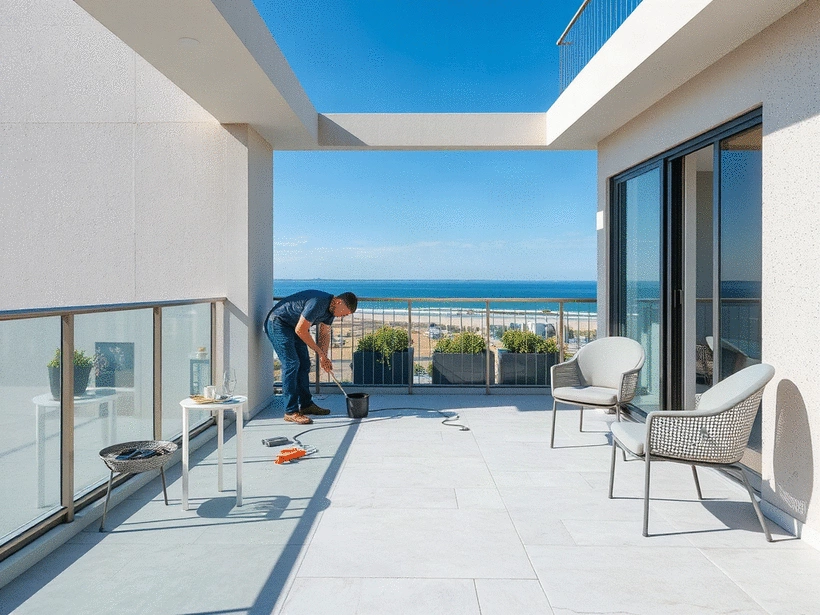
Balconies and rooftops are exposed to rain, drainage demands and changes in temperature. Problems can develop around membrane junctions, door thresholds, outlets, penetrations and transitions between different building materials.
Water pooling, deteriorating surface finishes, staining on the ceiling below a balcony and dampness near external doors are reasons to investigate. Blocked outlets or poor drainage can contribute to the problem, but clearing a drain will not repair a damaged membrane.
Where a balcony is above an occupied room or another apartment, prompt investigation is particularly important. Explore our guides to balcony waterproofing in Geelong and rooftop waterproofing solutions.
3. Damp Walls, Basements and Foundations
Moisture may enter below-ground areas through foundation walls, floor junctions, cracks or inadequately managed external drainage. In apartment buildings, basement car parks and storage areas may also be affected by water entering through joints, penetrations or retaining walls.
Signs can include persistent damp patches, white mineral deposits on masonry, peeling coatings, musty smells and water collecting along the floor or wall junction. The correct treatment depends on the entry path, surrounding ground conditions, drainage arrangements and the construction of the affected area.
Learn more about foundation waterproofing in Geelong.
4. Leaking Windows and External Walls
Rainwater can enter around window frames, façade joints, balconies and connections between external materials. Failed sealants, deteriorated joints, cracks and drainage defects may allow water to reach internal finishes.
Because wind-driven rain can enter from different directions, the problem may appear only during certain weather conditions. Repeatedly applying sealant to the visible edge may not solve the issue if water is entering through another joint or moving behind the façade.
Repair or Replace an Apartment Waterproofing System?
Deciding between a localised repair and full replacement requires an assessment of the damage and the existing system. The cheapest immediate option is not always the most suitable, but replacing an entire membrane may also be unnecessary when a clearly identified defect can be repaired reliably.
When a Repair May Be Appropriate
A targeted repair may be suitable when the source of water ingress has been identified, the surrounding waterproofing remains in serviceable condition and the defect can be accessed and repaired properly.
Possible repair situations include:
- A damaged sealant joint that can be replaced without leaving other defects unresolved.
- A drainage obstruction that is contributing to water accumulation.
- A localised defect around a penetration or junction, where the surrounding membrane remains suitable for repair.
- A plumbing leak that can be repaired separately from the waterproofing system.
Before proceeding, confirm that the proposed repair addresses the cause of the moisture rather than simply covering the visible damage.
When Replacement May Be Necessary
Replacement may need to be considered when a membrane has deteriorated across a substantial area, multiple defects are present, previous repairs have repeatedly failed or the system cannot be restored reliably with localised work.
Replacement can involve more extensive preparation and reinstatement, particularly where tiles, screeds, protective layers or other finishes must be removed to access the membrane. The scope should explain which components will be removed, what will be replaced and how the finished area will be protected.
Useful questions to ask include:
- Has the source of water ingress been identified?
- What evidence supports repair rather than replacement?
- Will existing tiles, flooring or other finishes need to be removed?
- How will junctions, outlets, penetrations and adjoining surfaces be treated?
- What testing or inspection will be carried out before the area is reinstated?
- What maintenance or limitations apply after the work is completed?
DIY Waterproofing: What Apartment Owners Should Know
Some maintenance tasks can be handled by an owner or building manager, but waterproofing repairs require care because the visible symptom may not reveal the underlying defect.
Tasks That May Be Suitable for Basic Maintenance
- Removing leaves and debris from accessible drainage grates, where it is safe to do so.
- Keeping an eye on recurring damp patches, stains or changes to surface finishes.
- Reporting leaking taps, plumbing problems or water entering around windows.
- Maintaining accessible surface sealants where the product, location and repair method are appropriate.
These tasks should not be treated as a substitute for investigating an active leak. Waterproof paint, surface coatings and sealants may not be suitable for a failed concealed membrane or water entering under pressure.
When to Seek Professional Assessment
Arrange an appropriate assessment if water continues to enter after basic maintenance, dampness returns after repairs, tiles become loose, a ceiling develops new staining or water appears to be moving between apartments. Avoid opening walls, removing tiles or applying new membrane products until the cause and repair requirements are understood.
Apartment owners should also consider who is responsible for the affected area. Depending on the building's ownership arrangements and the location of the defect, the issue may involve an individual lot, shared property or building services. Owners should notify the relevant owners corporation or building manager when common property may be involved and follow the building's reporting procedures.
Planning Waterproofing Work in an Apartment Building
Waterproofing work in a multi-unit building often requires coordination beyond the repair itself. Access, noise, dust, water use and reinstatement can affect residents and neighbouring properties.
Before work begins, clarify the following:
- Inspection and diagnosis: Record the affected areas and establish the likely source of moisture.
- Scope of work: Identify the surfaces, membrane areas, junctions and finishes included in the proposed repair.
- Access arrangements: Confirm whether the work requires entry to another apartment, a balcony, a rooftop or a shared basement.
- Protection and reinstatement: Establish how nearby areas will be protected and how removed finishes will be restored.
- Testing and documentation: Confirm what inspections or tests are appropriate for the system and what records will be provided.
- Building requirements: Check whether owners corporation approval, permits or other approvals are required for the particular work.
Where the work involves a bathroom or another wet area, the applicable design and installation requirements should be checked for the project. The relevant requirements depend on the building, the work being undertaken and the applicable regulations. Avoid assuming that a surface coating or a small patch automatically restores compliance.
For further guidance, see our article on bathroom waterproofing and AS 3740 in Geelong.
Choosing an Apartment Waterproofing Contractor
When comparing contractors, look beyond the quoted price. A useful proposal should explain the suspected cause of the problem, the recommended repair method, the areas included in the work and any important limitations.
Consider asking each contractor:
- What inspection or testing is needed to identify the source of the leak?
- Why is the proposed system suitable for the affected area?
- How will the existing substrate be prepared?
- How will corners, joints, drains and penetrations be addressed?
- What disruption should residents expect?
- What documentation, product information and workmanship warranty will be supplied, if applicable?
Compare quotations on the same basis. A lower quote may exclude removal of existing finishes, substrate repairs, testing or reinstatement, so confirm exactly what is included before making a decision.
Our guide to choosing a waterproofing company in Geelong provides further points to consider when assessing your options.
Frequently Asked Questions About Apartment Waterproofing
What are the most common signs of waterproofing problems in apartments?
Warning signs include recurring damp patches, peeling paint, musty odours, mould growth, loose tiles, swollen finishes and water stains on ceilings or walls. These symptoms can also have plumbing or condensation causes, so investigation is needed to identify the source.
Should an apartment waterproofing system be repaired or replaced?
The decision depends on the location and extent of the defect, the condition of the existing membrane and whether the source of water ingress can be corrected with a localised repair. A suitable assessment should explain why the recommended option is appropriate.
Can I fix an apartment leak with waterproof paint?
Waterproof paint may be suitable for some surface applications, but it is not a universal solution for water entering through a failed membrane, a structural joint or a plumbing defect. Identify the cause before choosing a product.
Who should I contact if water is leaking between apartments?
Notify the building manager or owners corporation if shared property or another apartment may be affected, and contact the appropriate person responsible for the property. Active leaks should be reported promptly to limit further damage.
Does balcony waterproofing need to be replaced when tiles are damaged?
Not necessarily. Damaged tiles can have several causes, and tile condition alone does not establish whether the underlying membrane has failed. The affected area should be assessed before deciding on repairs or replacement.
What should an apartment waterproofing quote include?
A clear quote should describe the affected area, proposed repair method, preparation requirements, materials, removal and reinstatement of finishes, access arrangements, testing where applicable and any stated exclusions or warranty terms.
Protecting Your Geelong Apartment from Water Damage
Apartment waterproofing is most effective when the source of moisture is identified and the repair is matched to the condition of the building. Whether the issue involves a bathroom, balcony, rooftop, external wall or basement, treating the cause is more reliable than repeatedly covering the visible symptoms.
Keep records of leaks and previous repairs, report recurring moisture promptly and clarify responsibilities where shared building areas may be involved. A clearly defined scope of work and an appropriate repair strategy can help owners and property managers make better-informed decisions about protecting their apartments.